
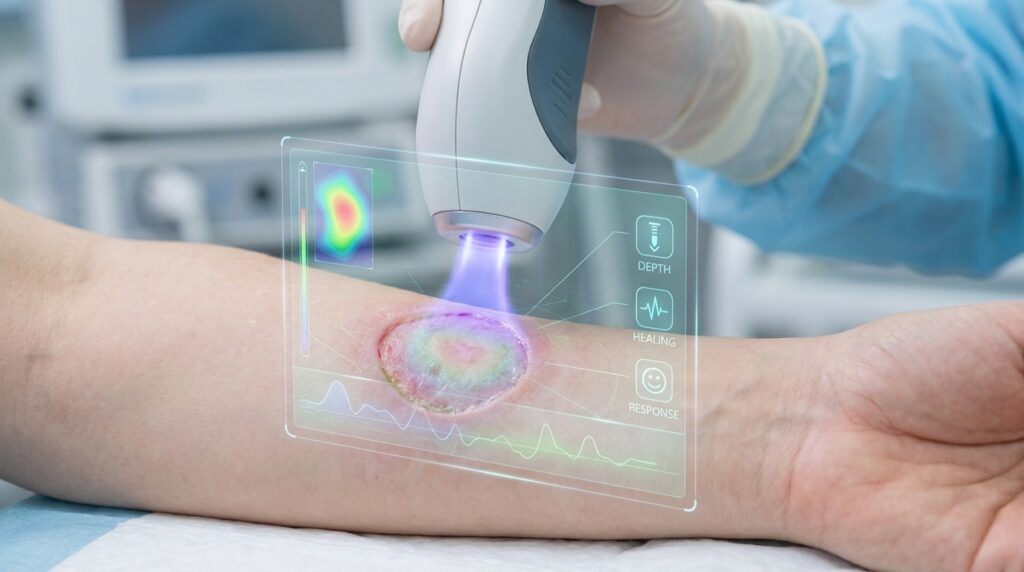
The Next Revolution in Personalized Medicine
Introduction
Modern medicine is rapidly shifting toward personalized treatment approaches, where therapies are tailored to each individual patient rather than applied uniformly. Two of the most promising technologies driving this transformation are plasma therapy and artificial intelligence (AI).
Plasma medicine—especially cold atmospheric plasma (CAP)—has already demonstrated remarkable potential in wound healing, dermatology, oncology, dentistry, and infection control. Meanwhile, AI has proven its ability to analyze complex biological data, optimize decision-making, and enable real-time adaptive treatments.
The integration of plasma therapy and artificial intelligence represents a powerful synergy that may redefine how medical treatments are designed, delivered, and optimized—ushering in a new era of precision and personalized medicine.
What Is Plasma Therapy?
Plasma is often referred to as the fourth state of matter, consisting of ionized gas containing electrons, ions, reactive species, and electromagnetic fields.
In medical applications, cold atmospheric plasma is particularly valuable because it:
- Operates at near-room temperature
- Is safe for living tissues
- Produces reactive oxygen and nitrogen species (RONS) with therapeutic effects
Key Medical Applications of Plasma Therapy
- Chronic wound healing
- Skin rejuvenation and dermatology
- Bacterial and viral inactivation
- Dental sterilization and periodontal treatment
- Cancer research and adjunct therapies
Plasma therapy is non-invasive, localized, and highly versatile—making it an ideal candidate for intelligent optimization.
The Role of Artificial Intelligence in Modern Medicine
Artificial intelligence in healthcare involves the use of:
- Machine learning (ML)
- Deep learning
- Computer vision
- Predictive analytics
AI systems can analyze massive datasets far beyond human capability, including:
- Medical images
- Biosignals
- Patient histories
- Treatment outcomes
This allows AI to support clinicians by offering data-driven insights, improving diagnostic accuracy, and personalizing therapeutic protocols.
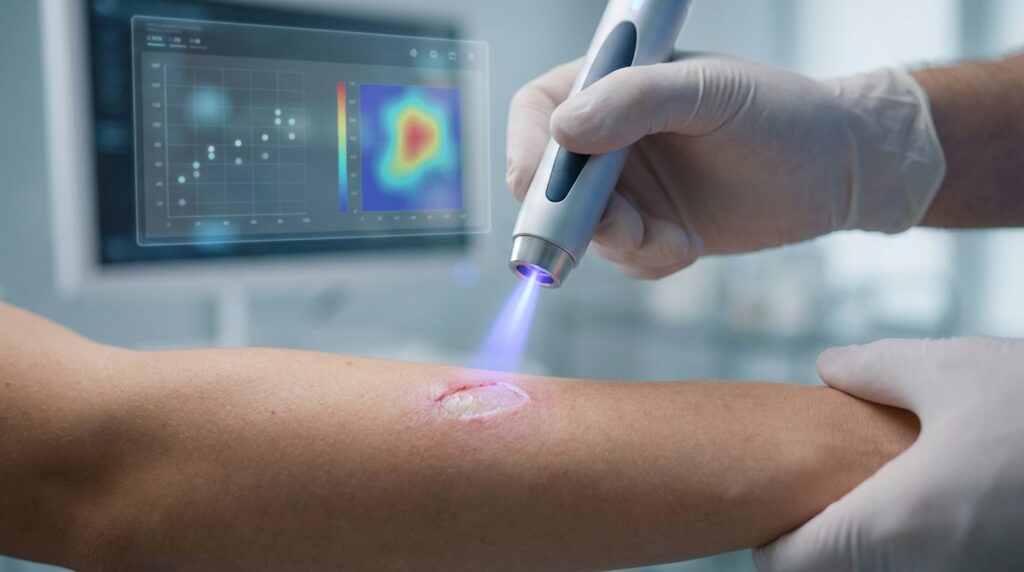
Why Combine Plasma Therapy with AI?
Although plasma therapy is effective, its outcomes depend on multiple variables:
- Exposure time
- Plasma intensity
- Distance from tissue
- Tissue type and condition
- Patient-specific biological response
AI can manage this complexity by continuously analyzing treatment data and adjusting parameters in real time.
Core Advantages of Integration
- Personalized treatment protocols
- Improved safety and efficacy
- Reduced trial-and-error
- Faster clinical decision-making
How AI Enhances Plasma-Based Treatments
1. Real-Time Parameter Optimization
AI algorithms can monitor tissue response and dynamically adjust:
- Plasma power
- Treatment duration
- Frequency of exposure
This ensures maximum therapeutic benefit with minimal side effects.
2. Predictive Treatment Planning
By analyzing historical patient data, AI can:
- Predict treatment outcomes
- Identify optimal plasma settings
- Recommend personalized therapy plans
3. Automated Image and Tissue Analysis
Using computer vision, AI can assess:
- Wound size and depth
- Tissue regeneration progress
- Infection severity
This enables objective and consistent evaluation.
4. Risk Reduction and Safety Control
AI systems can detect abnormal responses early and:
- Automatically pause treatment
- Alert clinicians
- Adjust intensity to prevent tissue damage
Key Applications of AI-Driven Plasma Medicine
Dermatology
- Personalized acne and skin regeneration treatments
- AI-based skin analysis for optimal plasma exposure
Wound Healing
- Smart wound care systems that adapt plasma dosage
- Faster healing of diabetic and chronic wounds
Dentistry
- Precision plasma sterilization guided by AI
- Optimized periodontal therapy
Oncology Research
- AI-assisted plasma treatment planning
- Improved targeting of cancerous tissues while sparing healthy cells
Plasma Therapy vs. AI-Enhanced Plasma Therapy
| Feature | Conventional Plasma Therapy | AI-Integrated Plasma Therapy |
|---|---|---|
| Treatment Settings | Fixed, pre-defined | Dynamic and adaptive |
| Personalization | Limited | High |
| Safety Monitoring | Manual | Automated & predictive |
| Outcome Prediction | Minimal | Data-driven |
| Efficiency | Moderate | Optimized |
| Clinical Consistency | Variable | Highly consistent |
Challenges and Considerations
Despite its promise, AI-driven plasma medicine faces several challenges:
- High-quality data requirements
- Regulatory approval and validation
- Integration with existing medical devices
- Ethical considerations in AI decision-making
However, continuous advancements in medical AI and device engineering are rapidly addressing these barriers.
The Future of Personalized Plasma Medicine
The future points toward smart plasma devices that:
- Learn from each treatment session
- Continuously improve outcomes
- Integrate with electronic health records (EHRs)
- Enable remote monitoring and telemedicine
Such systems could transform plasma therapy from a powerful tool into a fully intelligent therapeutic platform.
Frequently Asked Questions (FAQ)
What is personalized plasma therapy?
Personalized plasma therapy tailors plasma parameters to each patient’s biological condition using real-time data and AI analysis.
Is AI-driven plasma treatment safe?
Yes. AI enhances safety by monitoring tissue response and preventing excessive exposure.
Can AI replace doctors in plasma therapy?
No. AI acts as a decision-support tool, assisting clinicians rather than replacing them.
Which medical fields benefit most from AI-plasma integration?
Dermatology, wound care, dentistry, and oncology research currently benefit the most.
Is this technology clinically available?
Some AI-assisted plasma systems are already in development and early clinical use, with broader adoption expected in the near future.
Conclusion
The fusion of plasma therapy and artificial intelligence represents a transformative step toward truly personalized medicine. By combining the biological power of plasma with the analytical intelligence of AI, healthcare providers can deliver treatments that are safer, smarter, and more effective than ever before.
As technology continues to evolve, AI-enhanced plasma medicine is poised to become a cornerstone of next-generation medical care.